When French archaeologists dug up a Roman bust from the bottom of the Rhone River in Arles, I was immediately sceptical about its identification. It was claimed that the bust depicted Julius Caesar and had been produced during his lifetime. Now, two years later, the statue has been restored and studied and scholars are in disagreement over who the bust depicts. Portraits of Caesar are rare and none exist that date from his lifetime (except those on coins). The sculptures that have been identified as Caesar are idealized and it is hard to determine his true likeness.
Tuesday, December 1, 2009
The Debate Over Caesar's Head
Posted by
Primvs Pilvs
at
6:36 AM
1 comments
Thursday, October 1, 2009
Nero's Revolving Dining Room Found
"The main banquet hall was circular and constantly revolved day and night, like the heavens."
Posted by
Primvs Pilvs
at
12:48 PM
2
comments
Tuesday, September 22, 2009
Rare Alexander the Great Gemstone Found
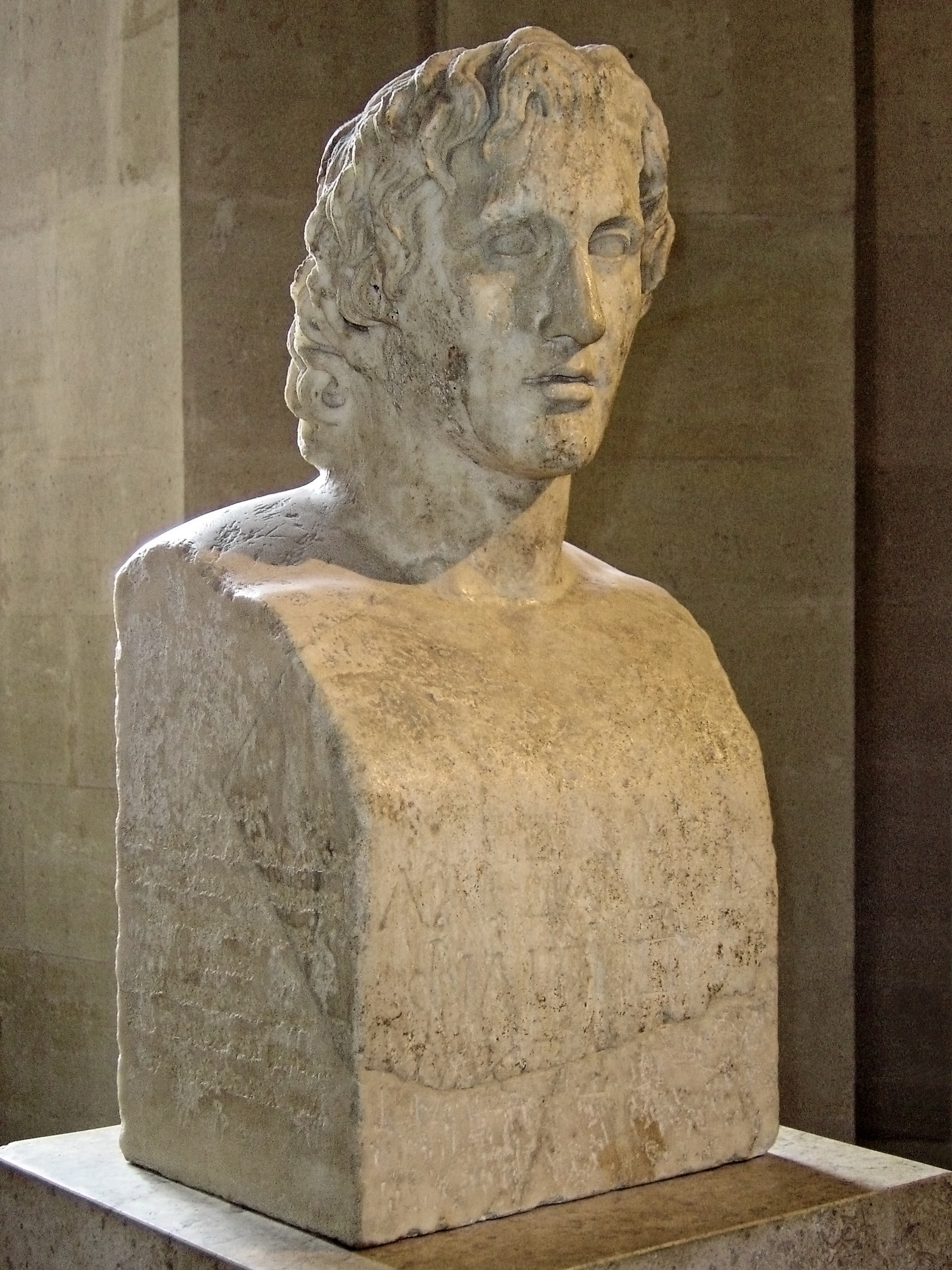
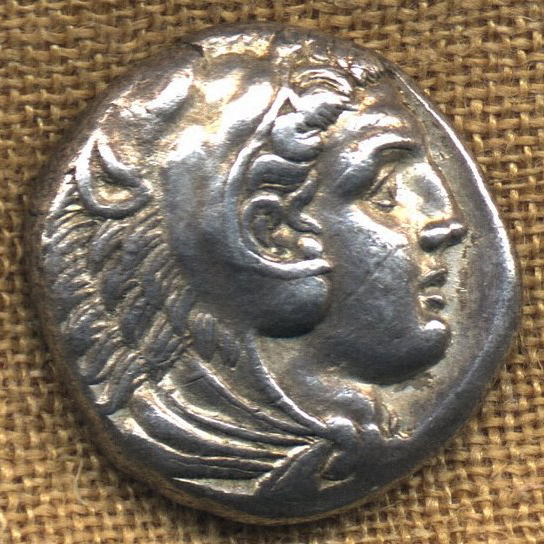
Alexander the Great is as much a historical figure as he is a legend. Today it is sometimes hard to separate the myth from the man, and even during his lifetime the line between man and mythical hero was vague. The facts we know about Alexander are impressive and it is no wonder that so many fantastic stories sprang up regarding his exploits. He was a master tactician; he conquered the Persian Empire and expanded the boundaries of Greek culture all the way to the Indus River. Authors and generals, both ancient and modern, have studied his tactics and victories. Pompey and Caesar are just a few of the famous men that tried to emulate his greatness. Not only was he a military genius, he was also a playboy. He was young, dashing and oh so handsome. It didn't hurt that he died young either, adding to his legendary appeal.
Posted by
Primvs Pilvs
at
7:02 AM
1 comments
Friday, September 18, 2009
Second Century Coin Hoard Found in Israel
I love Roman coins. The first Roman 'thing' I remember seeing was a collection of Roman coins being sold at a flee market. I was just a kid at the time and didn't know the first thing about the ancient world, but I do remember that the coins I saw looked just like American coins! Roman coins are extremely valuable from historical and archaeological perspectives, since they give us a documented chronology of important events and give us a terminus post quem for dig sites. Coins are also important from an art historical perspective; Roman coins have been the best, and in some cases only, way to assign names to the countless statues of emperors and other important persons. I consider ancient coins invaluable for the reasons above, but they also offer something for the non-scholar. When looking at Roman coins, one can't help but see the similarity between today's currency and that of the ancient world. Ancient coins are great for education because they are so familiar and they can help teach that people in the ancient world weren't that much different than us.
Posted by
Primvs Pilvs
at
12:02 PM
0
comments
Tuesday, September 8, 2009
Colossal Statue Found in Turkey
If you walked through any city or town during the time of the Greeks or Romans, you would be confronted with statues of all shapes and sizes. Many statues have come down to us through the ages, but some archaeological sites offer better evidence than others as to what the ancient city looked like. When the Persians sacked Athens in the 5th century BCE, they sacked the acropolis, destroying temples and statuary. The ruins the Persians left behind were buried by the Athenians after the war and in more recent times archaeologists have uncovered these same statues, giving us an idea of just how crowded the acropolis once was with them. Other Greek sites such as Olympia and Delphi were congested with statuary, as is attested by literary sources and archaeological remains. Rome followed suit and crowded its forum and beyond with statues of famous men and gods. Statues ranged in size and material, but the most prominent were life size or larger, usually made of bronze or marble. Colossal statuary also existed and two famous examples come to mind that were both made of bronze. One was the Colossus of Rhodes, completed in 280 BCE and considered one of the Seven Wonders of the Ancient World. The other is the Colossus of Nero. Less famous perhaps, this statue was the ultimate manifestation of Nero's arrogance and vanity and was converted to represent the sun god Helios after Nero's death. Most people aren't familiar with this statue but everyone knows of the building that stood next to it. The Flavian Amphitheater was nicknamed the "Colosseum" because of its proximity to the giant statue.
Posted by
Primvs Pilvs
at
6:14 PM
0
comments
Thursday, August 20, 2009
A New Theory Regarding Hadrian's Wall
A recent study claims that the ditch on the north side of Hadrian's Wall originally served as the foundation for a temporary wooden. British archaeologist Geoff Carter believes that the ditch was not used as a defensive barrier but instead is the remains of the wooden wall that preceded the famous stone wall. In Carter's hypothesis, the wall's milecastles were built first (of stone) with a wooden wall spanning the distances between them. After the mile castles were completed, the wooden wall served as a temporary defensive barrier while the stone wall was being constructed. It was previously believed that the ditch and corresponding post holes were part of a defensive barrier in front of the stone wall, a view that is being challenged by Carter. Hadrian's Wall was not constructed as a massive defensive barrier but as a permanent, permeable border, though it is still believed to have had considerable defensive barriers in the form of ditches in front of the wall. Only further studies will determine how Carter's theory is compatible with current views on the wall's defenses.
Posted by
Primvs Pilvs
at
8:39 AM
0
comments
Saturday, August 8, 2009
Possible Imperial Villa Found
An enormous Roman villa has recently been unearthed north of Rome in the Sabine Hills. Dating from the 1st century CE, the villa is believed to have been the country home of the Emperor Vespasian. Archaeologists at the site say the that the size and location of the villa point to Vespasian, though they admit that they have found no inscriptions or any other archaeological proof as to the owner's identity. Though this discovery is indeed special, it demonstrates a phenomenon that has been going on in classical archaeology since the birth of the field. Throughout the history of of Greek and Roman archaeology, erroneous attributions have been made to artifacts without any justification what so ever. Heinrich Schliemann and his "Mask of Agamemnon" comes to mind as an early example. Also, the countless number Roman statues attributed to famous people is astonishing. It was common practice one upon a time to dig up a bust and proclaim that it represented whoever you thought it did. Many positive identifications of Roman statues have been based on coin portraits, but that is a more recent science. You can still go to museums today and find a "Marius" or "Brutus" statue that could in reality be anyone.
Posted by
Primvs Pilvs
at
3:15 PM
0
comments
Tuesday, August 4, 2009
Enjoying "Playful Idleness"
Several years ago I went to Madison to see In Stabiano at the Chazen Museum of Art. The exhibit showcased frescoes and artifacts from ancient Stabiae, which was destroyed in the 79 CE eruption of Mt. Vesuvius. The exhibit was a delight; gorgeous frescoes covered the walls with marble sculptures and bronze artifacts interspersed, all in Madison care of the National Archaeological Museum of Naples. There was even a recreation of a triclinium with the original wall paintings assembled in their correct order so when you entered, you actually got the feeling of being in the ancient room. I'm not aware of any attendance figures, but I can only imagine that In Stabiano was a success for the Chazen. Though seeing such artifacts was a rare treat for me living in Wisconsin, the residents of Italy can see them at their leisure. The New York Times reports (see below) that Ravenna is home to a new exhibit entitled Otium Ludens (Latin for "playful idleness") which features nearly 200 wall paintings, many of which I was fortunate enough to see at the Chazen. The exhibit looks like yet another great collection of Roman art that will be displayed around the world; the New York Times states that the exhibit will travel from Ravenna to Toronto, Melbourne, Sydney, Madrid and Valencia.
Posted by
Primvs Pilvs
at
5:19 AM
0
comments
Saturday, July 25, 2009
Two Exciting New Underwater Discoveries
The scientific excavation and study of ancients sites around the Mediterranean has been going on for almost 150 years. It's hard not to trip over ancient cities and towns of the Greeks and Romans, not to mention the many other diverse cultures that have thrived throughout history. For centuries the various modern cultures of Europe have been fascinated by the ancient world. This interest was easily fueled by the convenient ruins strung about Europe, especially in cities like Rome and Athens. As far back as the middle ages, we have accounts of ruins and objets d'art being dug up and appreciated. It has not been until relatively recent times, though, that attention was turned away from land and towards the sea. It has never been a secret that the Mediterranean Sea contains countless ship wrecks containing who knows what. Tantalizing clues have occasionally been pulled from the sea floor; the Antikythera Mechanism and the Riace Bronzes come to mind. Scuba diving only became practicable and popular after WWII, so much less time has been spent in dealing with underwater archaeology that traditional land based archaeology. Even today, underwater archaeology is a small specialized field, due mostly to the costs involved.
Posted by
Primvs Pilvs
at
8:28 AM
0
comments
Monday, July 6, 2009
Generous Gift Showcases Roman Mosaic
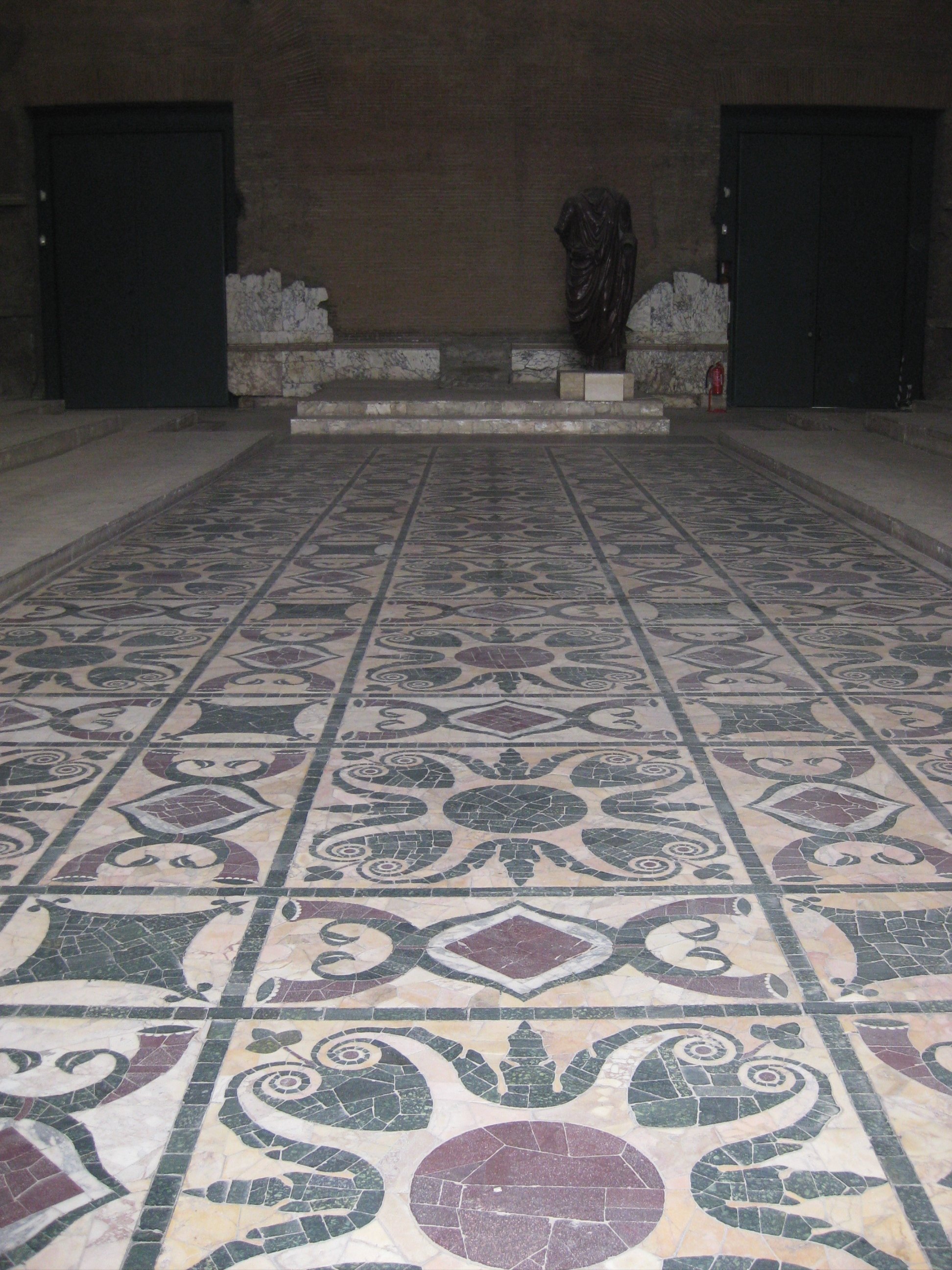
The Romans used mosaic art extensively throughout their empire. From Britain to the Middle East, examples of many different mosaic techniques have been discovered. Like much of Roman art, the mosaic technique was something that they absorbed and modified to suite their own artistic needs. The earliest mosaic examples come from Mesopotamia, dating from the 2nd millennia BCE. Those examples are primarily geometric in design using different colored tesserae. The Ancient Greeks embraced mosaics, decorating their floors with geometric designs made of tesserae or pebbles. In the royal Macedonian city of Pella we find some wonderful examples of figurative scenes executed in mosaic and during the Hellenistic period mosaic art would reach a new height. It is from the Hellenistic model that the Romans developed their mosaic art. Many famous Roman mosaics, such as the Alexander Mosaic from Pompeii, are thought to be based on Hellenistic paintings. Pompeii is famous for its many beautiful mosaics, but elsewhere in Italy and throughout the Roman world, many astounding mosaics have been found.
Posted by
Primvs Pilvs
at
12:15 PM
0
comments